




The rhetorical situation is a concept that helps writers more deeply understand the texts they’re reading, the texts they’re writing, and how messages are crafted and communicated across different contexts.
The parts of the rhetorical situation are as follows:
- Audience: The intended readers of a text.
- Purpose: What the writer wants the text to do in the world, such as affecting how the audience feels, thinks, or acts.
- Genre: What category a text belongs to based on its form, content, style, etc. Examples include a lab report, a persuasive academic essay, an academic journal article, a social media post.
- Exigency: This word comes from a Latin word that means “urgent.” From a writing process perspective, “exigency” refers to conditions that make a piece of text particularly appropriate. These conditions can be other events that are happening at the same time or a tough issue the text addresses.
- Context: Any other factors that affect the creation of the text, such as timing or current events.
The following graphic shows how these elements interact:
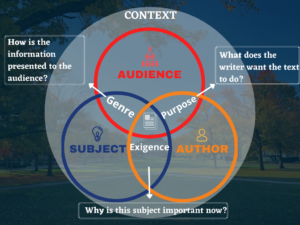
The rhetorical situation can be helpful in remembering all the factors to be considered at the start of a writing project, or that need to be thought through while providing feedback on a draft or analyzing a text. Some questions to consider might include:
- What is the purpose of this text? How does/should the audience shape this text? Does the text reflect its intended audience?
- Will this medium effectively convey this information and/or persuade this audience?
- Is this genre the most effective at conveying this information/persuading this audience?
- Are there any contextual factors that need to be considered when working on this text?
- Are there any mismatches between the audience, purpose, genre, and/or context?
Your answers to these questions may change your way of approaching the writing project or the feedback you provide for a piece of writing. Consider the following Twitter post as an example:
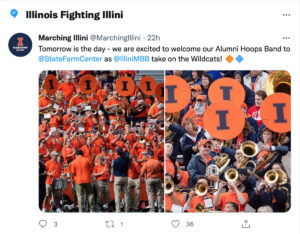
We can see the rhetorical elements at work in this short post. On the first look, this post has a clear marketing purpose towards the sports fans. The use of orange and blue in both the text and the visual will speak volumes to the intended audience. At the same time, as a Twitter post, the construction of this text will have to follow the genre conventions of a tweet (e.g., 280 characters or less) and the reading habits of many Twitter users (e.g., scrolling down fairly quickly). Meanwhile, the mentioning function can also help this tweet get to its intended audience. While engaging in academic writing projects will be different from crafting a Twitter post, academic writers will consciously or unconsciously make many decisions regarding these rhetorical elements.